The badger cull and the perturbation problem
A large randomised trial had already shown that culling badgers can spread bovine TB as well as reduce it. The policy proceeded anyway.
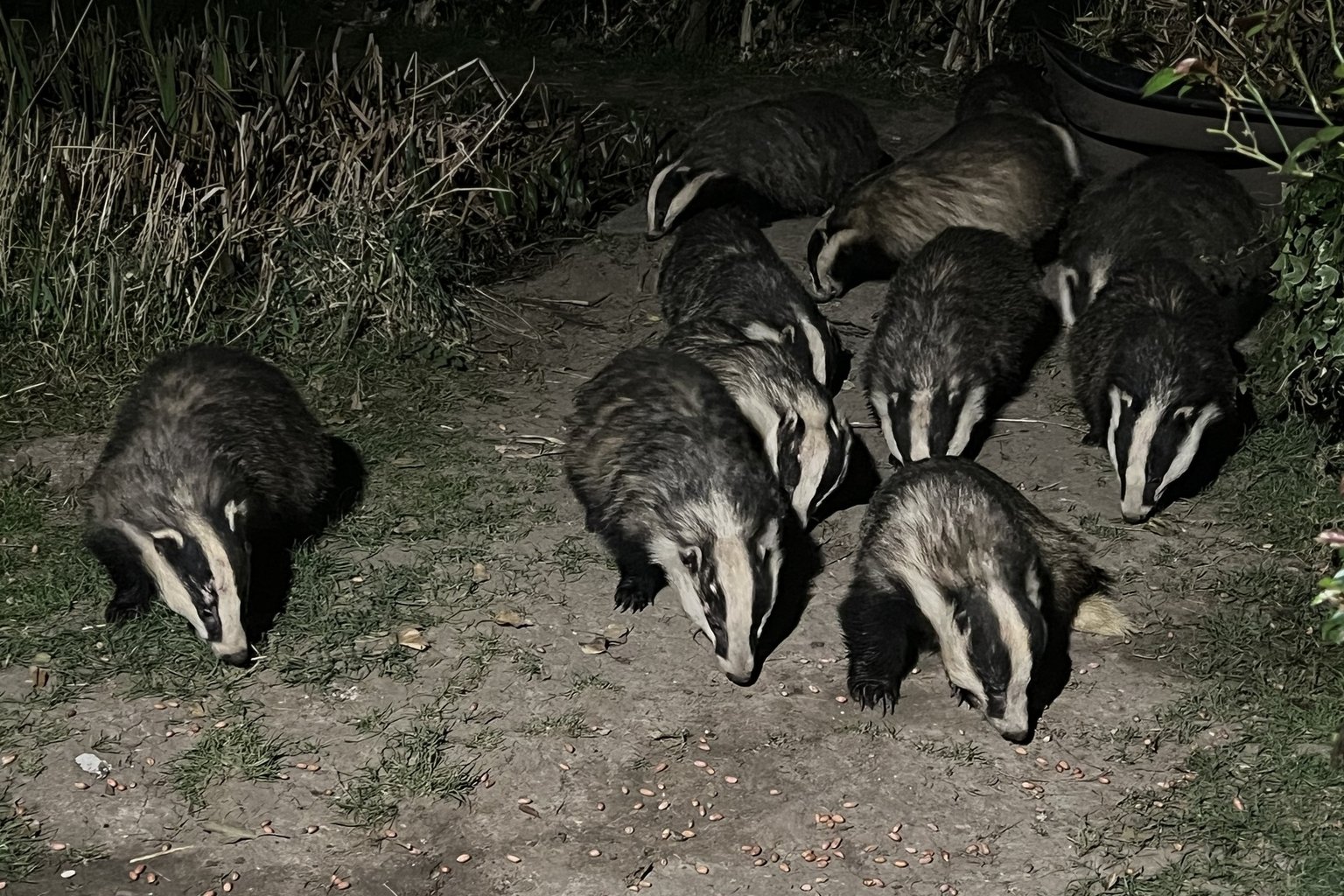
Bovine tuberculosis is a serious and expensive problem for cattle farming, and badgers can carry and transmit it. From there the argument for culling looks straightforward: reduce the reservoir in wildlife, reduce the infection in cattle.
The reason it is not straightforward had already been established, at considerable public expense, before the policy went ahead.
What the trial actually showed
The Randomised Badger Culling Trial was a large field experiment run in England over several years, specifically designed to test whether culling reduces bovine TB in cattle. It is the main body of experimental evidence that exists.
Its findings were awkward for everybody. Sustained, widespread, coordinated culling produced a modest reduction in cattle TB inside the culled area. It was accompanied by an increase in the land immediately outside it. And localised reactive culling — removing badgers in response to a herd breakdown, performed worse than doing nothing.
Perturbation
The mechanism behind that is the part worth understanding, because it is counter-intuitive and it generalises.
Badgers live in social groups with defended territories. Culling breaks those groups up, and the survivors then range more widely than they otherwise would, into vacated territory, across boundaries, and into contact with animals and herds they would not previously have met.
So a cull does two things at once. It removes infected animals, which reduces transmission. And it increases the movement of the animals that remain, which increases it. Which effect dominates depends on the scale and intensity of the cull, and on whether the boundaries of the culled area are hard: a cull area bounded by coast or motorway behaves differently from one bounded by more farmland.
Below a certain intensity and area, the second effect can outweigh the first. That is not a conjecture; it is what the trial measured.
Why the argument stays stuck
Two disagreements run in parallel and are constantly mistaken for one another.
The first is empirical: does culling, as actually carried out, reduce bovine TB in cattle enough to justify the cost? That question has a factual answer, and the evidence bearing on it is genuinely mixed rather than merely contested.
The second is ethical: whether killing large numbers of a protected native mammal is acceptable regardless of the epidemiology. That question does not have a factual answer, and no amount of trial data resolves it.
People arguing across those two positions are not disagreeing about the same thing, which is why the exchange never converges. It also means the empirical question tends to be argued by people whose real objection is ethical, and dismissed by people who assume it must be: neither of which helps.
The other half of the problem
Meanwhile the largest and least glamorous lever is cattle-to-cattle transmission: testing regimes, movement restrictions between herds, and farm biosecurity. The relative contribution of wildlife against cattle movement to the overall spread has been argued over as vigorously as the culling question, and it attracts a fraction of the public attention.
Vaccination (of badgers, or of cattle, where the diagnostic difficulties allow) is the other route, and the one that would make the argument moot if it could be made to work at scale. The reporting on the Common Agricultural Policy runs into the same wall from the other side: a policy whose effects are measured long after the argument about it has been settled.
Common questions
Why cull badgers at all?
Bovine tuberculosis causes serious losses in cattle herds, and badgers can carry and transmit the infection. Culling is intended to reduce the reservoir of infection in wildlife and so reduce transmission to cattle.
What was the Randomised Badger Culling Trial?
A field experiment carried out in England over several years, built to answer one question: does removing badgers lower the rate of bovine TB in cattle? It is still the largest piece of experimental evidence anyone in this argument can point to.
What did it find?
A result that suited nobody. Where the cull was sustained, coordinated and covered a wide area, herd incidence fell somewhat within the treated zone, and rose on the farmland just outside it. Where badgers were taken reactively, in response to a single herd breakdown, the outcome was worse than leaving them alone.
What is the perturbation effect?
Culling disrupts badger social structure. Surviving animals range more widely than they would have done, which increases contact between groups and with cattle, so removing some badgers can increase the spread of infection beyond the cull area even while reducing it within.
Does that mean culling never works?
No. It means the outcome depends heavily on how it is done: the area covered, the proportion removed, how quickly, and how consistently. A cull that does not meet those conditions can plausibly make the situation worse.
What are the alternatives?
Tighter control of infection passing between cattle: routine testing, restrictions on moving animals between herds, biosecurity on the farm. Vaccination is the other route, of badgers or of cattle. How much of the spread wildlife accounts for, measured against the movement of cattle, is itself disputed.
Why is this argued about so bitterly?
Because two separate disagreements run together. One is empirical, about whether culling reduces cattle TB. The other is ethical, about killing a protected native mammal at scale. People who agree on the science can disagree on the policy, and often do.