Index

Confusion species: the pairs, and the feature that separates each

Each of these is a pair of birds regularly taken for one another, and the feature that decides it. Where the feature is hard to see, that is said rather than glossed over.

See the comparison plates on their own →

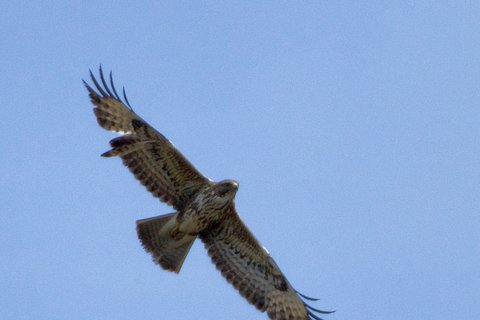
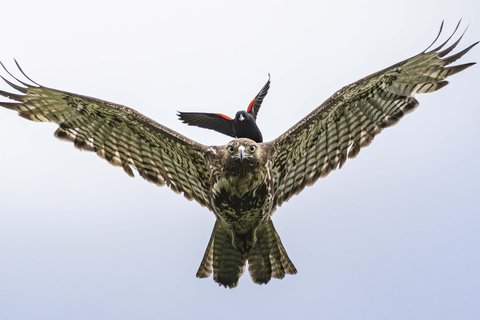
  1. A Common Buzzard seen from below in flight against a clear blue sky, wings spread, showing the pale panel and dark carpal patches on the underwing. Common Buzzard A Red-tailed Hawk seen from below in flight against a pale sky, wings fully spread, with a Red-winged Blackbird perched on its back mobbing it. Red-tailed Hawk Common Buzzard against Red-tailed Hawk the patagial bar on the underwing The tail everyone reaches for fails on juveniles and on Steppe Buzzards. The underwing does not. has a diagram
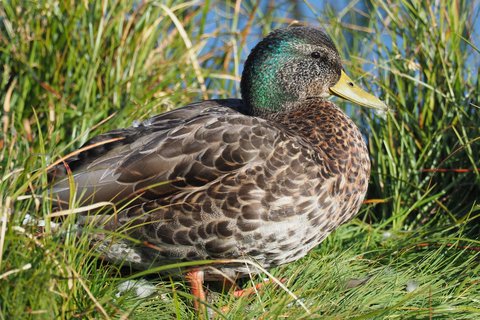
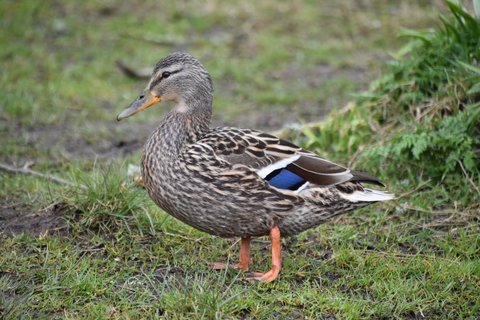
  2. A Mallard in moult at the edge of a reedbed, the body mottled brown like a female's but the head still showing green gloss and the bill plain olive-yellow. Drake in eclipse A female Mallard standing on short grass in profile, mottled brown throughout, with a blue speculum edged white on the folded wing and a dark bill marked with orange. Female Mallard Drake in eclipse against Female Mallard bill colour, which the moult does not change For a few weeks each summer most drakes wear the duck’s colours and cannot fly at all.
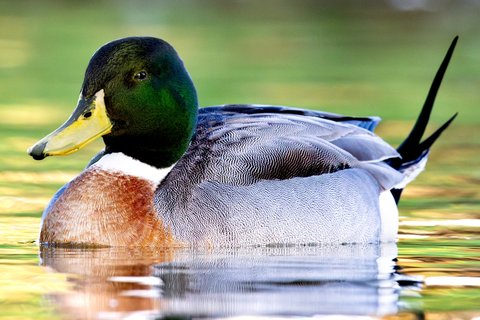
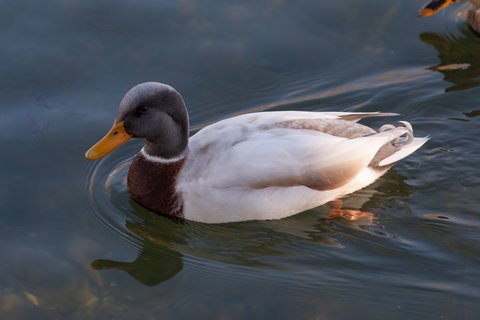
  3. A drake duck swimming: a Mallard's glossy green head and yellow bill, a white wedge running up the side of the neck, a chestnut breast, finely vermiculated grey flanks and two long pointed black central tail feathers held up behind. Mallard hybrid A Mallard of domestic ancestry swimming, with a plain dark brown head instead of green, a chestnut breast, a white neck ring and a pale cream body. Feral domestic Mallard Mallard hybrid against Feral domestic Mallard whether the white is structured or just patchy Most odd park ducks are not hybrids: domestic ducks are Mallards, so the cross is within one species. has a diagram
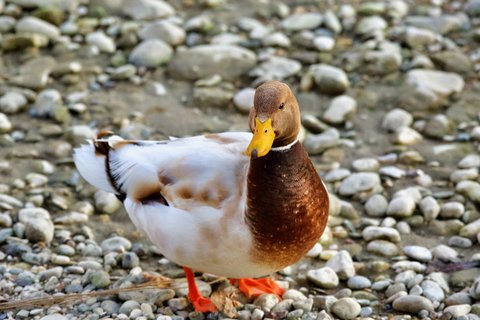
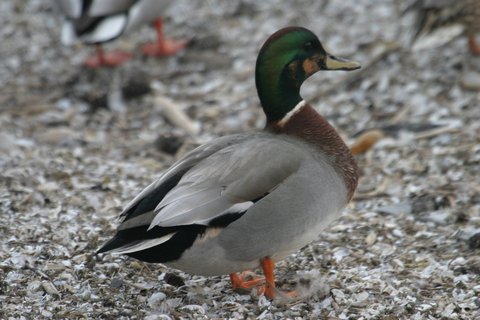
  4. A domestic-type Mallard standing on a shingle bank, pied white and chestnut with a buff head and an orange bill, heavier and more upright than a wild bird. Manky Mallard A drake duck standing on shingle: a green and brown head with a thin white neck ring, a chestnut breast, and a plain grey body with black and white markings towards the rear. Two Mallards stand out of focus behind it. A genuine cross Manky Mallard against A genuine cross build first, then the arrangement of the white Heavy, low-sitting and outsized means domestic ancestry, whatever the plumage is doing.
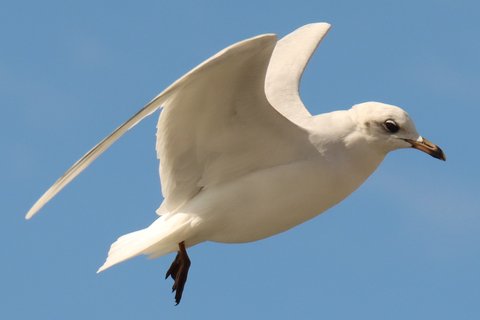
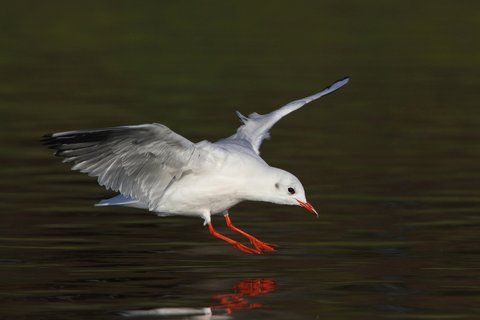
  5. An adult Mediterranean Gull in flight against a blue sky, its outer wing entirely white with no black in the wingtip. Mediterranean Gull A Black-headed Gull dropping to land on dark water, wings spread, showing a white leading edge to the outer wing and black tips to the primaries. Black-headed Gull Mediterranean Gull against Black-headed Gull the white wedge on the outer wing In its first winter the Mediterranean Gull has no white wingtip yet, so the adult’s giveaway is missing.
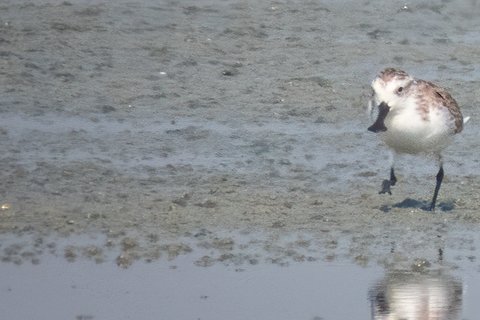
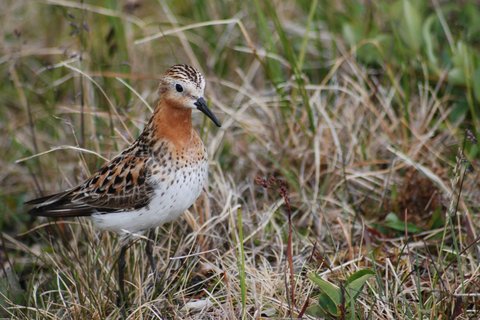
  6. A Spoon-billed Sandpiper feeding on a wet mudflat, seen at distance in profile, with other small waders behind it. Spoon-billed Sandpiper A Red-necked Stint in breeding plumage standing among short grass, the face and throat brick red, the upperparts marked with black and chestnut. Red-necked Stint Spoon-billed Sandpiper against Red-necked Stint the sideways sweeping feeding action The bill that names the species is invisible in profile, which is the view a scope usually gives.
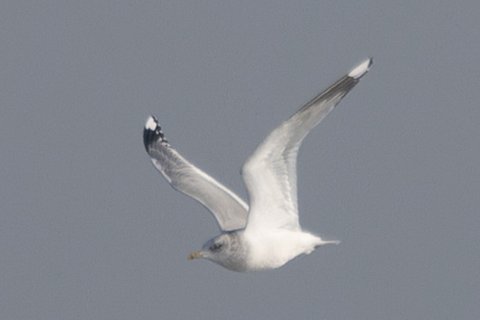
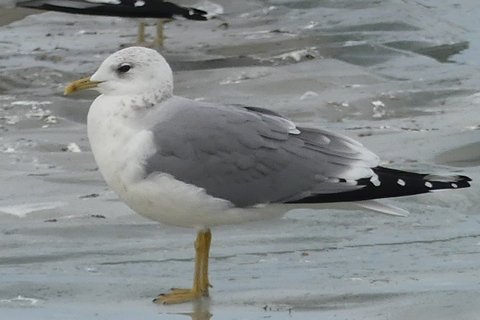
  7. A gull in flight against plain grey sky, seen from below and behind: white head and body, grey upperwing, and black wingtips marked with white. Kamchatka Gull An adult Common Gull standing in shallow water in profile, grey above with black wingtips marked with white, and a plain yellow-green bill. Common Gull Kamchatka Gull against Common Gull size and bill depth, but only against a reference bird Every separating feature is comparative, and the two are almost never seen side by side.
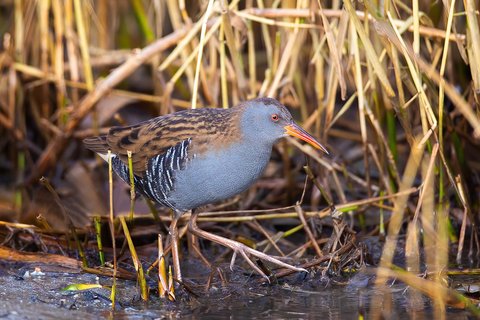
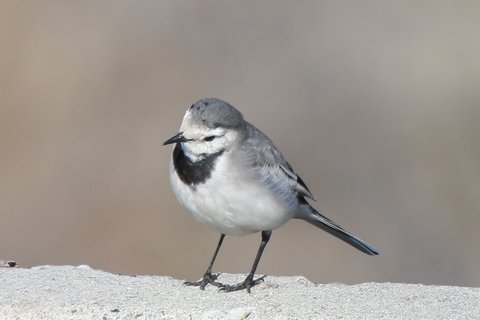
  8. A Water Rail at the edge of a reedbed, half screened by dead stems, showing its grey face, long red bill and barred flanks. Skulking A White Wagtail standing on a concrete ledge in the open, black bib and cap, grey back, long tail, head turned to one side. Wary, secretive, inconspicuous Skulking against Wary, secretive, inconspicuous what the bird is doing about you Four words for four different situations, each calling for a different response.