plumage · moult · hybrids
Bird identification: plumage, moult and the confusion species
Birds that are mistaken for each other, and the features that actually separate them. Plumage changes through the year, the moult that makes a drake look like a duck, and the hybrids that break the field marks altogether.
Every confusion pair on the site, and the feature that separates each The comparison plates, all in one place
Most difficult sightings are not rare birds. They are ordinary birds seen in the wrong light, at the wrong angle, or in the wrong month, and the pairs that cost people the most time are common ones. The material in this section works from named features rather than from general impression, because a feature can be checked against what was actually seen and an impression cannot.
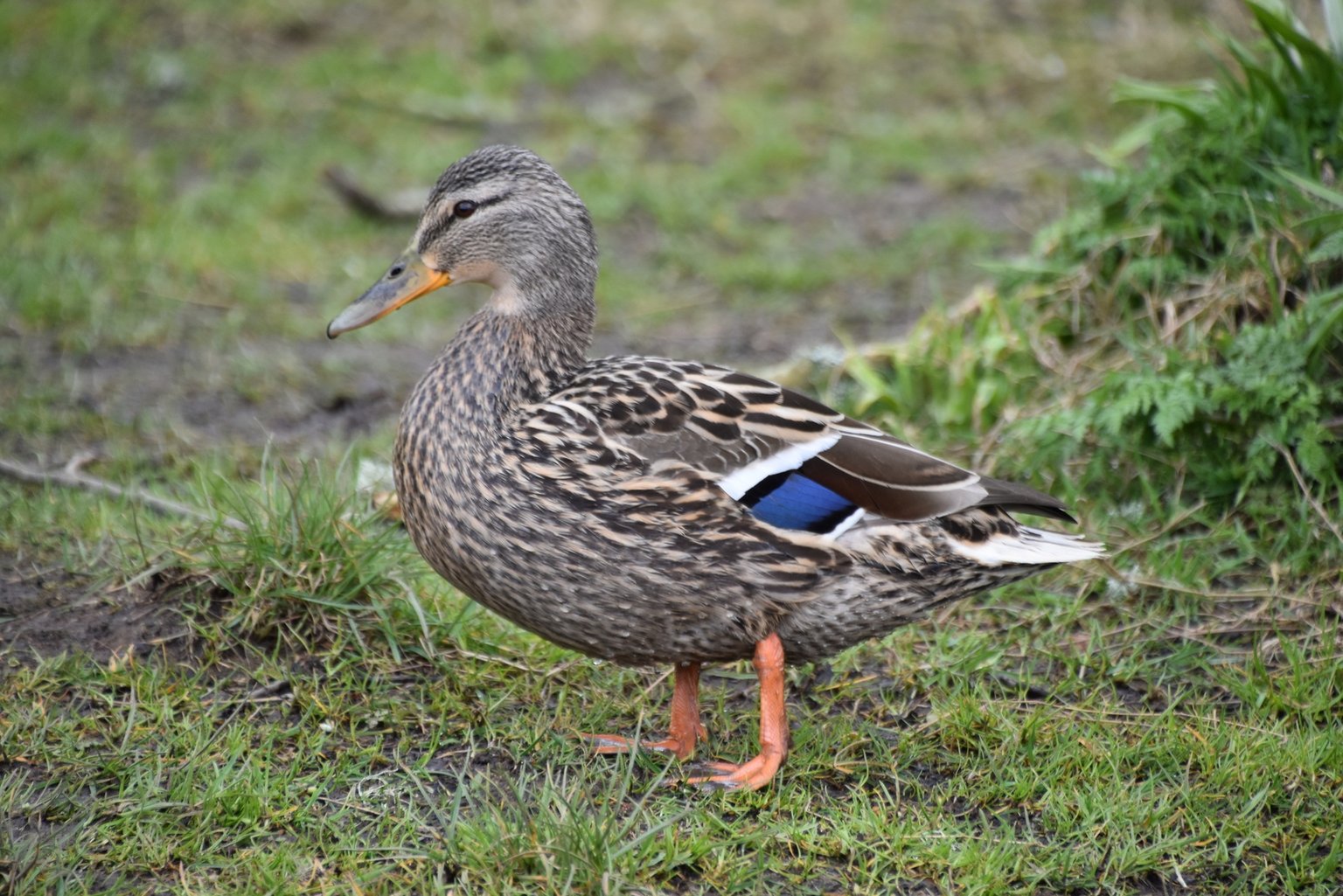
Three things account for most of the confusion. The first is moult: a bird replaces its feathers on a schedule, and for part of the year it does not look like its picture in the book. A drake Mallard in July wears the female pattern and cannot fly, which is the subject of the eclipse plumage account. The second is age: a bird in its first year often shares neither the adult plumage nor the adult proportions. The third is hybridisation, which is routine on any town lake and which breaks field marks outright rather than merely obscuring them.
Where two similar species cannot honestly be separated on what was seen, that is recorded here as the answer rather than resolved by guesswork. An unresolved bird is a normal outcome of watching birds, not a failure of method, and a guide that never reaches that outcome is describing a hobby nobody has.
The comparison plates draw the diagnostic features rather than photographing them, so that the feature under discussion is the thing the reader is looking at. The index of confusion pairs lists every pair covered on the site together with the single feature that separates it.
- Common Buzzard vs Red-tailed Hawk: identification by tail band
Common Buzzard vs Red-tailed Hawk: two buteos that should never meet. On a vagrant the underwing and the tail band are what separate them.
- Eclipse plumage in ducks: moult and identification
For a few weeks each summer a drake wears the duck's colours and cannot fly. What eclipse plumage is, when it happens, and how identification survives it.
- Mallard hybrids: identification of domestic and feral crosses
Mallard hybrids, and the birds mistaken for them. How to tell a true cross from a feral domestic duck, and which field marks still mean something.
- Manky mallard: identification of domestic and feral park ducks
The odd ducks on every town lake have a name. What a manky mallard is, where the domestic genes come from, and how to tell one from a genuine hybrid.
- First-winter Mediterranean Gull: separating it from Black-headed
In its first winter a Mediterranean Gull is neither white-winged nor obvious. The mask, the bill, the wing pattern, and the one feature that settles it.
- Identifying claimed Spoon-billed Sandpipers
The bill shape that names the species is invisible from most angles. What separates a Spoon-billed Sandpiper from a Red-necked Stint in a large flock.
- Kamchatka Gull: the eastern Common Gull
Larus canus kamtschatschensis is bigger, heavier-billed and paler-eyed than the western form, and shows how subspecies limits actually get argued.
Common questions
What is a confusion species?
A bird that is regularly mistaken for another one in the field. The term covers genuinely similar species, such as Common Buzzard and Red-tailed Hawk, and also single species whose appearance changes enough through the year that one plumage is taken for a different bird altogether.
Where should you start if a bird will not resolve?
With the bare parts. Bill shape and colour, leg colour and eye colour change far less through moult and wear than plumage does, and in many pairs they separate the birds when the feathers will not. Structure and proportion come next; colour and pattern are the least reliable of the three, and the first to be altered by light.
Why does the same bird look different in summer and winter?
Because it has moulted. Feathers wear out and are replaced on a schedule that varies by group: most ducks replace all their flight feathers at once and spend three to four weeks unable to fly, while most songbirds replace them in sequence and stay airborne throughout. Both processes change how a bird looks, and the duck version changes it dramatically.
How can you tell whether a duck is a hybrid?
Start by separating two categories that guides tend to run together: a scruffy park bird with white in the wrong places is usually not a hybrid but a Mallard carrying domestic genes. A true hybrid generally shows a coherent mixture of two wild species rather than an arbitrary patchwork. The distinction matters because it decides whether the bird can be named at all.
Is it acceptable to leave a bird unidentified?
Yes, and it is the honest record when the features needed were not seen. Distance, poor light and a bird that will not turn round all remove information that no amount of subsequent reasoning puts back. Recording what was seen rather than what it probably was keeps the record usable.
Do the comparison plates show photographs?
No. They are drawn, because a photograph shows one individual in one light and a drawing can isolate the feature under discussion. Photographs are used elsewhere on the site, under licence and credited, where the point is what a real bird looks like rather than what separates two of them.