profiles
Species accounts: where each bird lives and how it is faring
Accounts of individual species: where they live, what has happened to their numbers, and what makes each one recognisable in the field.
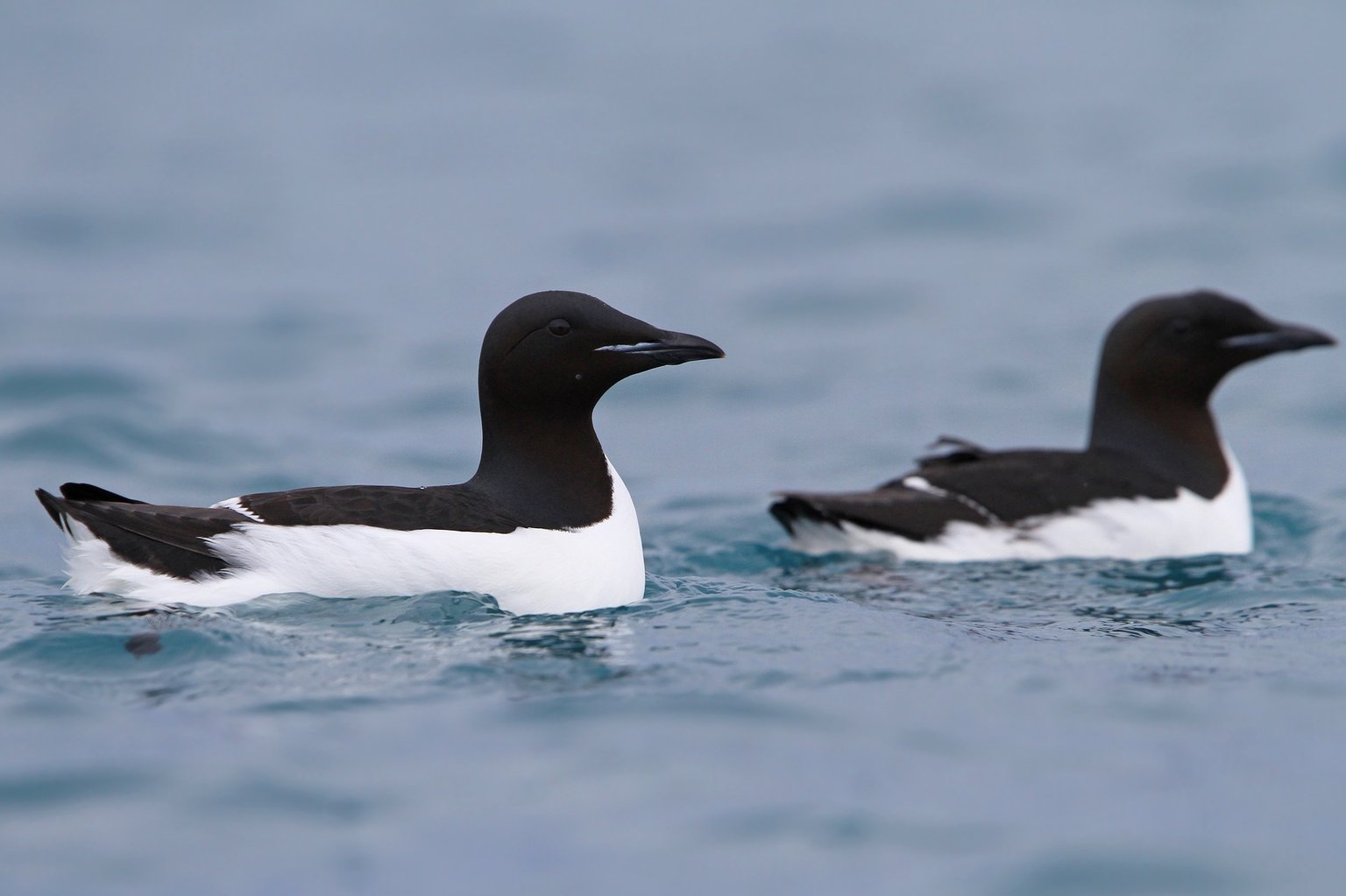
These are accounts of individual birds and animals: where the species lives, what has happened to its numbers, and what makes it recognisable when it is in front of you. They are written to be read on their own rather than as entries in a systematic list, so each one leads with whatever is actually interesting about the species rather than with a standard set of headings.
The selection follows the reporting rather than a checklist. Species appear here because something on the site concerns them: a conservation programme, a site under threat, an identification problem, so the coverage is deep in some groups and absent in others. Shorebirds of the East Asian–Australasian Flyway are the densest cluster, because that is where most of the conservation reporting goes.
Numbers are given where a published figure exists and are attributed to whoever published them. Where a population estimate is old, contested, or has moved since, that is said rather than smoothed over: a single confident figure is easy to write and frequently wrong.
The A–Z index lists every species covered, with a photograph of each, and is the quickest way in if you are looking for a particular bird rather than browsing.
- The Cahow: a petrel that was extinct for 300 years
The Bermuda Petrel was written off in the seventeenth century and rediscovered in 1951. Reaching a hundred nesting pairs took another sixty years.
- The Echo Parakeet: from a dozen birds back to a population
In the 1980s the Echo Parakeet was reduced to a handful of individuals on Mauritius. What it took to reverse that, and why the recovery is instructive.
- Grey Parrots, CITES and the limits of a trade quota
Export quotas for wild-caught Grey Parrots continued while wild populations fell. What a quota does and does not count, and what changed in 2016.
- House Crow: the bird that arrives by ship
Corvus splendens spreads by hitching rides on cargo ships. Why a bold, adaptable crow becomes a problem wherever it lands, and why ports are where to act.
- Lasioglossum calceatum: a common bee nobody looks at
One of the most widespread solitary bees in Europe, with a life cycle that switches between solitary and social behaviour depending on the season.
- Mangrove Finch: the rarest of Darwin's finches
A Galápagos finch reduced to two small mangrove patches on one island, and a parasitic fly that kills nestlings faster than the birds can replace them.
- Puerto Rican Tody: the San Pedrito and the family it belongs to
A six-gram green and red endemic most visitors hear before they see. What the Puerto Rican Tody is, and why todies live only in the Caribbean.
- Testing shorebirds for avian influenza without harming them
Surveillance sampling means catching wild birds. How they are held between capture and release decides the welfare outcome and whether the data is usable.
Notesshort entries, not full articles
- Auklets, Brünnich's Guillemot and Siberian Accentor in Korea
Records of northern seabirds and a Siberian passerine from the Korean peninsula: the kind of observation that fills in a distribution map.
- Barn Swallow roosts at Ebbaken, Nigeria
European Barn Swallows winter in West Africa in enormous roosts, and ringing at Ebbaken connects them to breeding populations far to the north.
- Chris Collins on returning from Chukotka
A 2011 conversation recorded a day after the Heritage Expeditions guide returned from the Spoon-billed Sandpiper fieldwork in north-eastern Russia.
- Christoph Zöckler on the Spoon-billed Sandpiper Recovery Group
A 2011 interview with the coordinator of the Spoon-billed Sandpiper Species Recovery Group, recorded before the survey expedition to eastern Russia.
- Christoph Zöckler: an update from Slimbridge
Recorded a week after the first Spoon-billed Sandpipers reached Slimbridge, on the breeding programme, hunting on the wintering grounds, and reclamation.
- Discarded fishing tackle and the Black-faced Spoonbill
A Globally Endangered spoonbill with a world population in the low thousands, and a threat that rarely makes the list: line and hooks where birds feed.
- Filming the Bogotá Sunangel question
A hummingbird at a private reserve in north-eastern Colombia, and whether it is a species known from a single nineteenth-century specimen.
- The Spoon-billed Sandpiper on the 100 most threatened list
A note on the species' inclusion among the world's hundred most threatened, and on what such lists are and are not useful for.
- The Spoon-billed Sandpipers at Slimbridge
Birds taken as eggs in Arctic Russia, reared and flown to Gloucestershire, shown for the first time, and what a captive population that size can do.
- Surveying wintering Scaly-sided Mergansers in Korea
A river survey update on an Endangered duck with a world population of around 1,700 pairs, a significant share of which winters in the Republic of Korea.
- Terry Townshend on Jankowski's Bunting
One of East Asia's rarest birds, and a BirdLife Species Champion's effort to keep it from extinction. Recorded in Beijing.
Common questions
How are species chosen for an account?
By what the rest of the site reports on. A species gets an account when there is something specific to say about it: a recovery programme, a threatened site it depends on, or a persistent identification problem: rather than to fill out a systematic list.
Are the photographs of the actual species described?
Yes. Every photograph is matched to the species by its source observation rather than chosen for looks, and each one carries its photographer and licence. Where no usable licensed photograph of a species exists, the account runs without one rather than borrowing a picture of something similar.
Why do some accounts give a population figure and others not?
Because a reliable figure does not exist for every species. Where one has been published it is quoted and attributed; where the available estimates disagree, or are old enough that quoting them would be misleading, the account says what is known instead of inventing a number.
What is the East Asian–Australasian Flyway?
The migration route running from breeding grounds in Arctic Russia and Alaska south through East and South-East Asia to Australia and New Zealand. It is the most heavily used and most heavily developed of the world's flyways, and the loss of intertidal feeding sites along the Yellow Sea is the pressure that connects many of the species covered here.
Does an account cover more than birds?
A few do. Where the reporting reaches an insect, a mammal or a plant, a solitary bee, a badger, a dormouse, that species gets an account on the same terms as a bird.