Species Note
Discarded fishing tackle and the Black-faced Spoonbill
A Globally Endangered spoonbill with a world population in the low thousands, and a threat that rarely makes the list: line and hooks where birds feed.
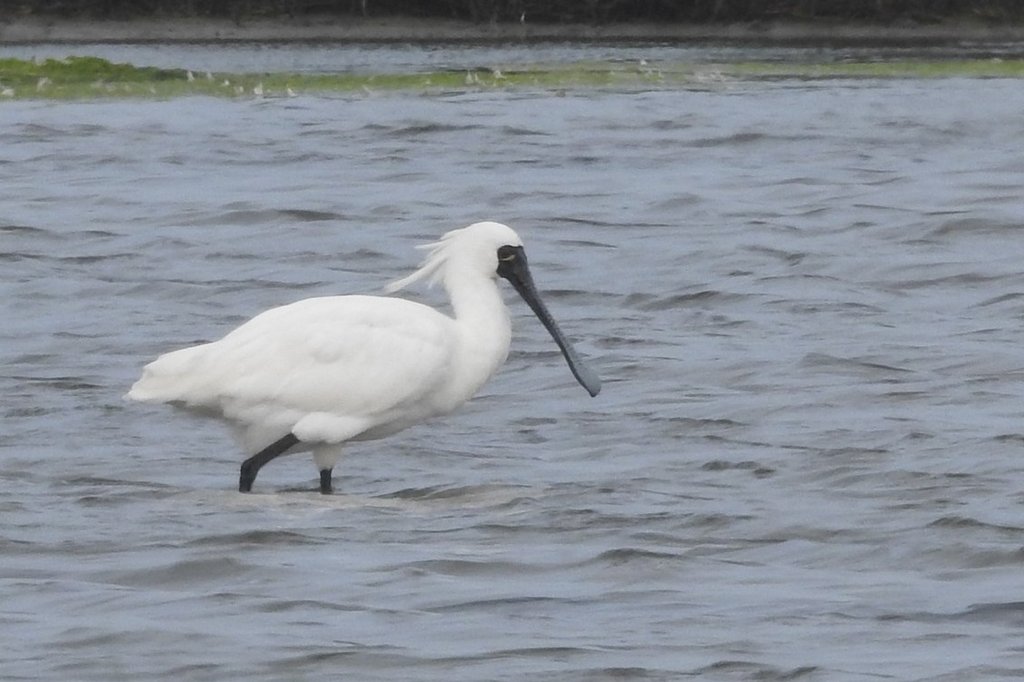
The Black-faced Spoonbill Platalea minor is a Globally Endangered species endemic to East Asia. On the international census figures discussed at the time, the entire world population stood at around 1,800 birds.
The threats usually listed against it are the familiar ones for a coastal waterbird in this region: development of the tidal flats it feeds on, particularly around the Yellow Sea, and disturbance at the feeding and roosting sites that remain.
The case that prompted this piece was a bird found injured in Japan, entangled in discarded fishing tackle. It is worth recording because it does not appear on the standard threat list at all.
Monofilament line and hooks left at a site where a long-legged, long-billed bird wades and probes are close to purpose-built for causing injury. The line does not degrade quickly, it is effectively invisible in shallow water, and an entangled bird is generally either killed outright or disabled in a way that amounts to the same thing.
For a common species this is an animal-welfare matter that leaves the population untouched. For a species numbering in the low thousands, whose individuals are concentrated at a small number of known sites, every avoidable death is a measurable proportion, and litter at those specific sites becomes a conservation issue rather than a tidiness one.