Ulcinj Saltpans: could tourism save a wetland Montenegro was selling?
A working saltpan on the Adriatic flyway, abandoned as an industry and coveted as a development site. What was at stake, and why tourism cut both ways.
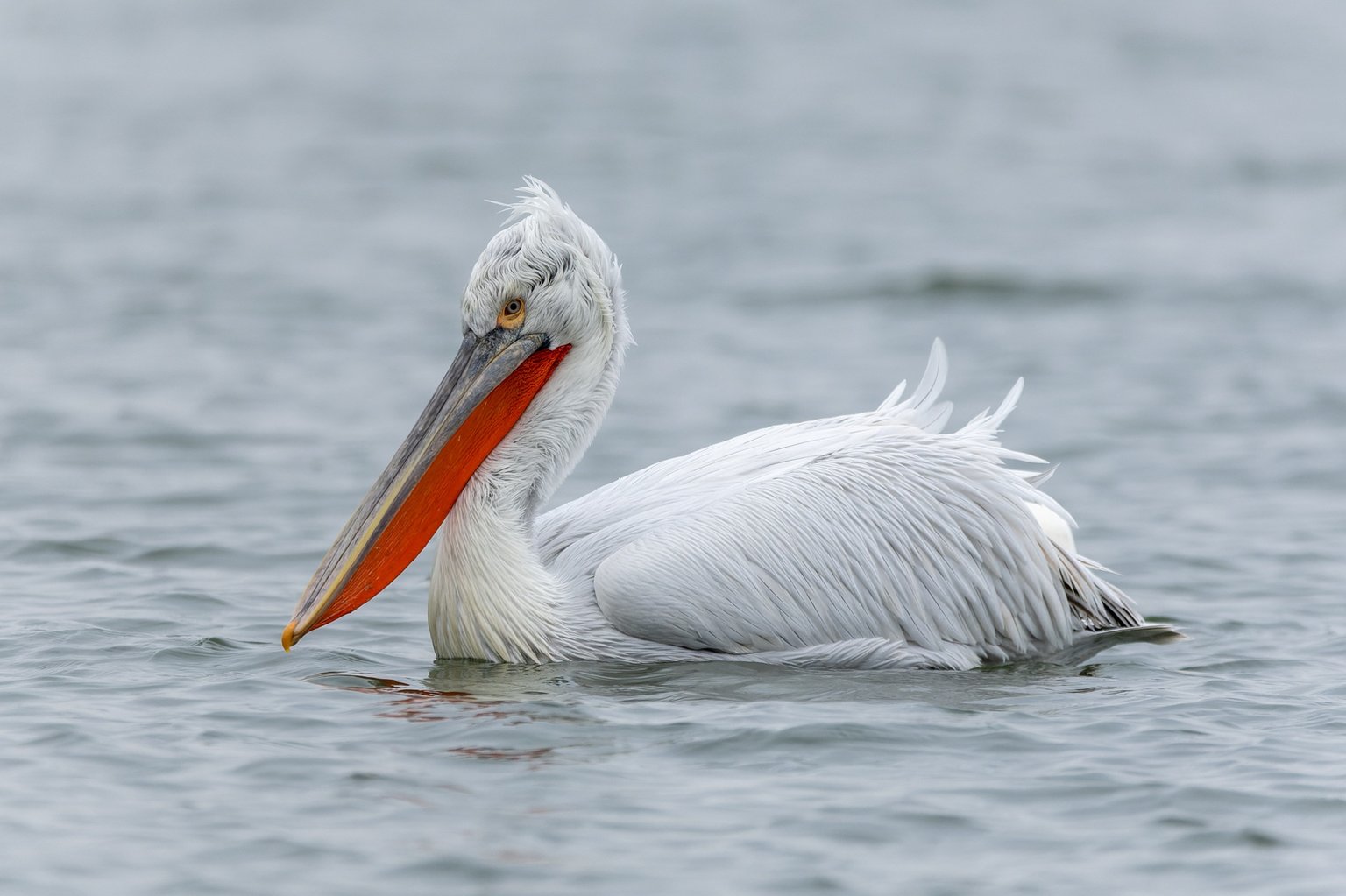
Montenegro is small and, for birds, disproportionately significant. Independent since 2006, it packs marsh, open water, rocky shore, coniferous forest and deciduous woodland into a country crossable in a day, with Lake Skadar, a Ramsar wetland of international importance, at the centre of it.
The species list runs to over 300, and includes substantial proportions of Europe’s Pygmy Cormorant Microcarbo pygmaeus, Little Bittern Ixobrychus minutus and Scops Owl Otus scops, along with the Endangered Dalmatian Pelican Pelecanus crispus. Five sites in the country carry Important Bird Area designation, and birdwatchers have been coming for something close to two centuries.
Two of those sites are held to be the most important resting places on the eastern Adriatic flyway: Lake Skadar National Park, and the Ulcinj Saltpans, known locally as Solana Ulcinj.
Fourteen and a half million square metres
The saltpans cover about 14.5 million square metres, which is the figure worth carrying through the rest of this. It is not a pond that a development could be built around. It is one of the largest pieces of managed coastal wetland on that stretch of the Adriatic, and it sits next to a coastline that has been filling with tourism development for two decades.
Which is how it came to be for sale. The pans were scheduled to be sold on 16 January, for a price reported as likely to reach two hundred million euros, to developers proposing a large-scale tourist complex including golf courses. That is the competing use, stated plainly, and it is a serious one: two hundred million euros is a substantial sum in an economy of Montenegro’s size.
An industrial site that became a bird site
The saltpans at Ulcinj were built to produce salt: a large complex of shallow evaporation basins on the coast, managed for a commercial purpose that had nothing to do with wildlife. What they produced as a by-product was a very large area of shallow, controlled, brackish water, which is close to the ideal habitat for waders, terns, flamingos and wildfowl on migration through the Adriatic.
This is a common pattern and worth understanding properly. Once natural coastal wetland has been drained or built over, artificial saline habitat can become the most important bird site in a region. The birds are indifferent to the fact that a place was made for industrial reasons.
Why the end of production is a problem
Salt production and bird habitat are joined here in a way that is easy to state and easy to underestimate: the birds are using the machinery. A saltpan is a sequence of basins at different salinities and depths, and each stage suits a different set of species. The shallowest, saltiest pans hold the invertebrate concentrations that waders and flamingos feed on; the deeper, fresher ones hold wildfowl. What produces that gradient is a pumping and flooding schedule run by people to make salt, week by week, through the season.
The vulnerability of such a site is that its habitat depends on its industry. Saltpans work because someone pumps, floods and drains them on a schedule. When production stops, that management stops with it — and the pans either dry out or flood uncontrolled, and the shallow, graduated water levels that made the site valuable disappear.
So the closure of the salt works threatened the site twice over. It removed the management the habitat depended on, and it turned a working industrial complex into a large parcel of undeveloped coastal land in a country expanding its tourism industry. Coastal land of that size, in that position, carries a development value against which a bird site with no revenue has very little to offer.
Conserving it means running it
There is an awkward consequence that follows from all of that, and it separates a saltpan from almost every other site on this list.
Protecting a marsh means leaving it alone, or restoring the hydrology and then leaving it alone. Protecting a saltpan means keeping it in operation. Abandoned pans go one of two ways: they dry to a bare crust, or the sea gets in and they equalise at a single depth. Both hold a fraction of what a working complex holds, because what the birds are exploiting is the variation between basins, and variation is a thing somebody has to maintain.
So a conservation designation here has an operating cost attached, permanently. Either salt production continues, in which case the habitat is a by-product of a business that has to remain viable, or a conservation body takes on the pumping and flooding itself and runs an industrial site for ornithological reasons. Neither is a boundary on a map. That is a harder thing to fund than a nature reserve, and it is the reason the future of a site like this is never settled by a single decision.
It was removed from the plan before it was sold
The decisive step was administrative rather than physical, which is usually how these things go and is usually reported least.
Amendments were made to Montenegro’s Spatial Plan, without consultation, that deleted the designation of Solana Ulcinj as a protected area and reassigned it for tourist land use. Nothing had been built at that point and no habitat had been lost. What had changed was the document against which any future application would be assessed, and with the designation gone the site’s legal position went with it.
The response was a petition organised by the Centre for the Protection and Research of Birds of Montenegro, which had gathered around 2,500 signatures at the time this was first written, with the open acknowledgement that thousands more and sustained international lobbying would be needed to get the amendments reversed. It is worth being clear about what that campaign was asking for: not new protection, but the restoration of protection that had already existed and had been removed by a planning amendment.
A roost at the middle of a 5,000-kilometre flight
The reason a saltpan on the Adriatic carries international weight is the same reason a tidal flat on the Yellow Sea does, and it is worth setting out in the terms EuroNatur’s managing director Gabriel Schwaderer used when the sale was announced: many migratory birds, Garganey and Curlew Sandpiper in particular, “would not survive the tremendously long flight of up to 5.000 km from Eurasia to Africa without being able to roost in Solana Ulcinj”.
That is a claim about a network rather than about a place. A bird crossing from Eurasia to Africa is not choosing a pleasant stop; it is spending down a fuel reserve that has to be replaced at intervals the bird cannot alter. Remove one of the intervals and the flight does not become harder, it becomes unmakeable. It is exactly the argument this site sets out at length about Saemangeum and the Yellow Sea, on a different flyway and at a smaller scale, and the structure of it does not change.
What the lake got that the pans did not
The contrast with Lake Skadar, twenty kilometres inland, is instructive and slightly uncomfortable.
Skadar is a national park and a Ramsar site. In 2008 the World Bank granted it more than 4.5 million dollars for an integrated ecosystem management project, and a bid was made to add it to the UNESCO list. More than a million birds pass over the lake and its connected deltas on spring and winter migration, with something like 150,000 wintering on the lake itself, and the local ornithologist Darko Saveljić has put its avifauna, in quality and quantity, alongside the Danube delta, the Po delta, the Guadalquivir and the Camargue.
The saltpans are used by many of the same birds on the same journeys. What they lack is the category. Skadar is a lake, which reads as nature and attracts designation, funding and a UNESCO bid. Solana Ulcinj is a disused industrial facility, which reads as brownfield land, and a disused industrial facility that happens to be internationally important for birds has to argue for recognition that a lake receives automatically.
The tourism argument, and its cost
Hence the proposition in the title of the original piece: that ecotourism might be what saves it. The logic is sound as far as it goes. Birders already visited, the site is close to existing tourist infrastructure, and visitor spending is the one form of value a protected saltpan can generate to set against a development proposal.
The caveat is worth stating, because it is usually left out. Once the case for a site rests on visitor numbers, the site has accepted a test it might fail. A wetland that is internationally important but quiet has no argument left if importance has been redefined as footfall. Ecotourism can be an effective way of protecting a place; it is a poor way of justifying why it deserves protection.
The current status of the Ulcinj Saltpans is a matter for BirdLife International and the Montenegrin conservation organisations working on the site, and has moved considerably since this was first written. A comparable wetland under a different kind of pressure is Burdur Lake in Turkey, which is falling because of what happens upstream rather than on the site.
Common questions
What are the Ulcinj Saltpans?
A large area of shallow evaporation pans on Montenegro's Adriatic coast, built for salt production. Saltpans of this kind create exactly the shallow brackish habitat that migrating and wintering waterbirds use heavily, and Ulcinj became one of the most important sites on that stretch of coast.
Why does a man-made site matter for conservation?
Because the birds do not distinguish. Where the natural coastal wetland has gone, a working saltpan may hold the largest remaining stretch of shallow saline water for a long way in either direction, and a place nobody made for wildlife ends up carrying the region's waterbirds.
What happened to the salt works?
Salt production ceased to be commercially viable and the operation wound down. That is the point at which a working saltpan becomes vulnerable: without the pumping and water management that production requires, the pans dry out or flood, and the habitat degrades even without any development.
Why was development a threat?
Because the site is coastal land next to the sea in a country actively developing its tourism industry. Undeveloped coast of that size and location carries a very high notional value, and a bird site with no production revenue has little to weigh against it.
What else does Montenegro hold for birds?
Several Important Bird Areas, including Lake Skadar, a Ramsar wetland of international importance. The country's mix of marsh, open water, rocky shore and forest supports over 300 species, including significant proportions of Europe's Pygmy Cormorant, Little Bittern and Scops Owl, and the Endangered Dalmatian Pelican.
Can ecotourism actually protect a site like this?
Sometimes, and with a caveat. It gives the site a revenue that can be argued against the development value, which nothing else does. But it also means the case for protection rests on visitor numbers, and a site that stops attracting them loses the argument it was given.